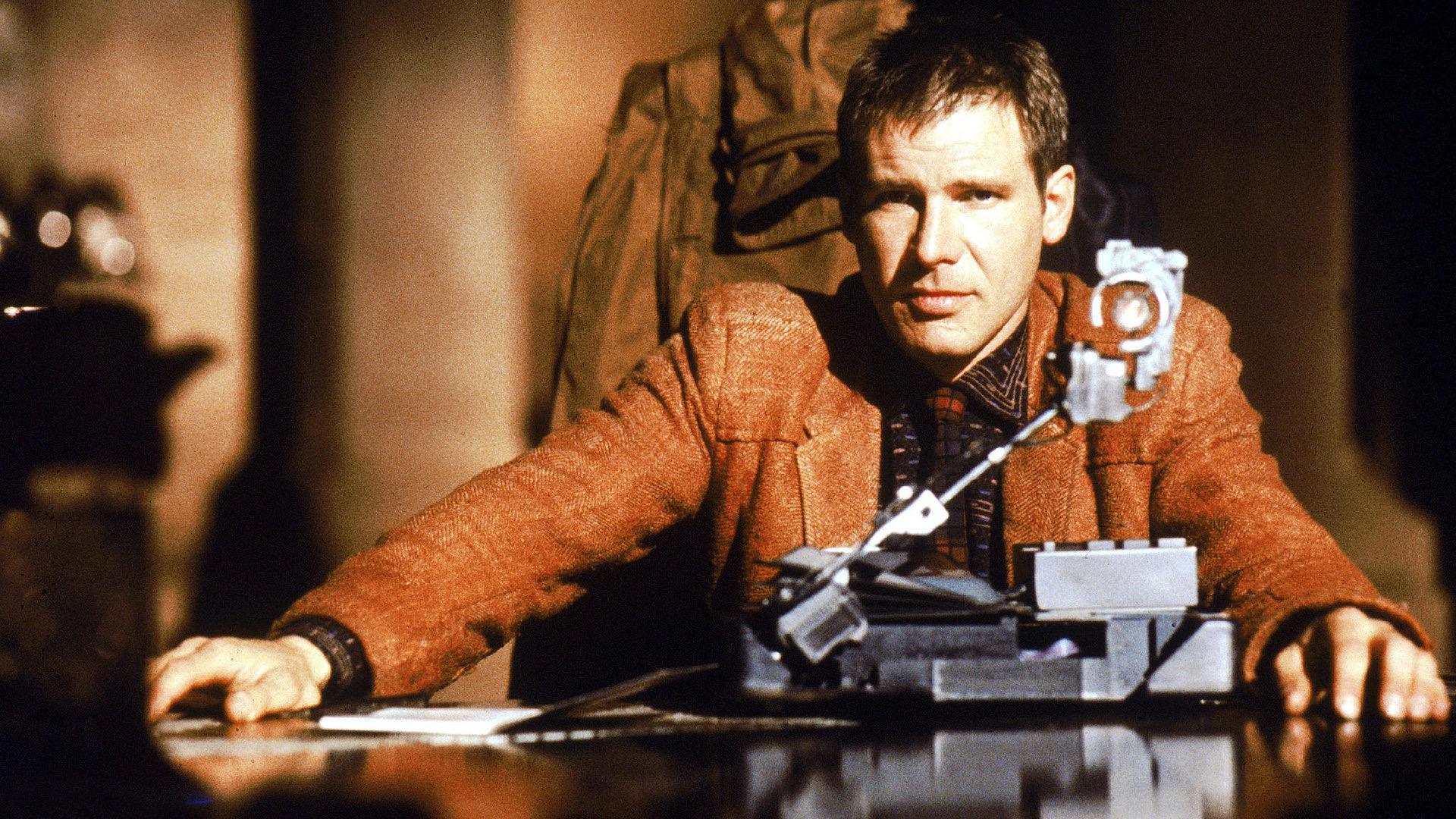
It’s 2018 and LA is a dystopian urban sprawl. Rick Deckard (Ford) is a blade runner or bounty hunter of replicants. Created by the Tyrell Corporation replicants are androids almost indistinguishable from humans. They are illegal on Earth after a bloody mutiny on an off-world colony, yet six Nexus replicants have purposefully made their way back to Earth. The thing about Nexus-6 replicants is they have the potential to develop human emotions, that’s why they’ve been restricted to 4 year life-spans. Plus there’s a prototype replicant, Rachel, who’s been implanted with Eldon Tyrell’s niece’s memories.
Award-winning director Ridley Scott’s ground-breaking masterpiece is loosely based on science fiction writer Philip K Dick’s 1968 novel Do Androids Dream of Electric Sheep? Dick died a few months before the release of what is accepted to be the greatest adaptation of his work, having feared that Scott would turn his novel into “one titanic collision of androids being blown up, androids killing humans, general confusion and murder, all very exciting”.
Set in a futuristic but recognisable Los Angeles designed by accredited ‘visual futurist’ Syd Mead, Blade Runner changed the look of big budget sci-fi movies – for example by cinematographer Jordan Cronenweth’s use for the first time on a major Hollywood movie of Xenon lights. Although a box office disappointment on its release, its influence on film-makers has only grown.
“Blade Runner is simply one of those cinematic drugs that when I first saw it, I never saw the world the same again.” Guillermo del Toro
“From a pragmatic point of view, Blade Runner is one of the most successful films of all time in terms of constructing reality using sets … Ridley Scott has always been the absolute master.” Christopher Nolan
“When you create a film dealing with humans and cyborgs, you have no choice but to refer back to Ridley Scott’s Blade Runner … the foundation of movies with this theme.” Mamoru Oshii